The Next Wave of Cyber Threats
Cybersecurity has always evolved alongside technology, but quantum computing represents a once-in-a-generation disruption.
Unlike incremental changes such as cloud migration or AI adoption, quantum computing introduces a fundamental shift in computational power, enabling attackers to break the cryptographic foundations that secure the digital world today.
Quantum threats are not theoretical anymore.
Tech giants, national labs, and startups across the globe are racing to build large-scale quantum computers capable of solving complex problems that classical systems can’t. Unfortunately, among those problems are the very equations that keep your encrypted data safe.
The Quantum Threat to Encryption
The most common cryptographic systems used today such as RSA, Diffie-Hellman, and ECC, depend on mathematical problems like factoring large primes or solving discrete logarithms.
Quantum algorithms such as Shor’s Algorithm can solve these problems efficiently, rendering traditional public-key cryptography obsolete.
This means that, if a sufficiently powerful quantum computer emerges:
- TLS sessions (used in HTTPS) could be decrypted.
- Digital signatures could be forged.
- Long-term encrypted data archives or communications could be fully exposed.
This potential future event is often called Q-Day, the moment quantum computers can break today’s encryption standards.
What Is “Harvest Now, Decrypt Later” (HNDL)?
Even before quantum computers reach full strength, attackers are already exploiting the time gap. Attackers are already collecting encrypted data today, such as medical records, financial transactions, military communications, and intellectual property; with the intent to decrypt it in the future once quantum capabilities mature.
This approach is known as “Harvest Now, Decrypt Later” (HNDL).
The threat isn’t waiting for Q-Day, it is happening right now.
Why This Matters
- Sensitive data often has long confidentiality lifetimes, years or even decades.
- Compromised data could lead to national security risks, regulatory breaches, or loss of trust years after initial collection.
- Many organizations are unaware that their current encryption lifecycle exposes them to this risk.
In other words:
Even if quantum decryption isn’t here yet, the quantum threat timeline has already started.
How Harvest Now, Decrypt Later Works
- Interception or Access: Attackers intercept encrypted network traffic or exfiltrate encrypted data.
- Storage: They store this encrypted data in in large-scale data storage.
- Wait: They wait until quantum computing or new cryptanalysis methods allow decryption.
- Decryption: Once capable, they decrypt the data instantly, gaining access to years of harvested confidential information.
This type of attack could bypass detection because, technically, no decryption occurs during the original breach. By the time decryption becomes possible, it’s too late to revoke or rotate keys, the data is already exposed.
Organizations at Risk
Organizations dealing with long-lived data and high-value intellectual property are expected to face higher exposure:
|
Organization Type
|
Data Type
|
Data Confidentiality Lifetime
|
|---|---|---|
|
Banking, Finance, Insurance
|
Transaction records, customer data, compliance data
|
30 years +
|
|
Healthcare
|
Patient data, research results, genomics
|
20 years+
|
|
Government, Defense
|
Classified intelligence, diplomatic cables, PII
|
50 years +
|
|
Telecom & Communications
|
Encrypted communications, PII, IoT
|
Continuous
|
|
Critical Infrastructure, Utilities
|
Critical infrastructure data, Cyber Physical Systems Data (OT, IoT)
|
If your data must stay secure for 5 years or more, the quantum threat is already relevant today.
Organizations that begin crypto-agility and PQC migration now will be prepared before the quantum threat becomes operational.
Responding to the Threat: Quantum Readiness Starts Now
A Post-Quantum Cyber Readiness roadmap should include the following actions:
Start Crypto Discovery Now: Map where and how encryption is used — including certificates, APIs, applications, and endpoints.
Classify Data by Longevity: Identify data that needs long-term protection (5+ years). These are your quantum-vulnerable assets.
Deploy Crypto Agility Frameworks: Build systems that can rapidly transition from RSA/ECC to quantum-safe algorithms once implemented.
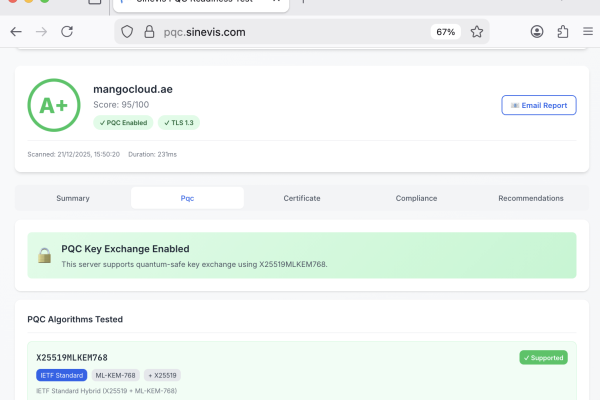
Adopt PQC Pilots: Begin testing NIST’s approved algorithms (e.g., ML-KEM, ML-DSA, SLH-DSA) in controlled environments.
Integrate Quantum Readiness into Policy: Embed quantum-risk assessments into enterprise governance, vendor contracts, and data-protection strategies.
Educate Leadership: Ensure that board members and executives understand that quantum risk = long-term data exposure and not just a technical issue.
The Invisible Breach Has Already Begun
Quantum threats aren’t about tomorrow’s technology, they’re about today’s inaction.
Every encrypted dataset stored today could become tomorrow’s breach headline.
The shift to Post-Quantum Cryptography is one of the most important cybersecurity transformations of our time.
Preparing for it now means protecting not just your systems, but your organization’s future.
Organizations that act now will:
Stay compliant with upcoming regulations.
Protect customer trust and brand reputation.
Gain a competitive edge as quantum-ready pioneers.
Our Post-Quantum Readiness Series
This article is Part 2 of our Post-Quantum Cyber Readiness Series, where we are covering complex concepts.
In this series, we covered:
- Part 1: Introduction to Post-Quantum Cryptography
Part 2: Understanding Quantum Threats and “Harvest Now, Decrypt Later” Attacks
Part 3: NIST PQC Standards – What Organisations Need to Know
Each article will equip CEO’s, CISOs, IT leaders, and Architects with the knowledge and tools to navigate the quantum transition confidently.